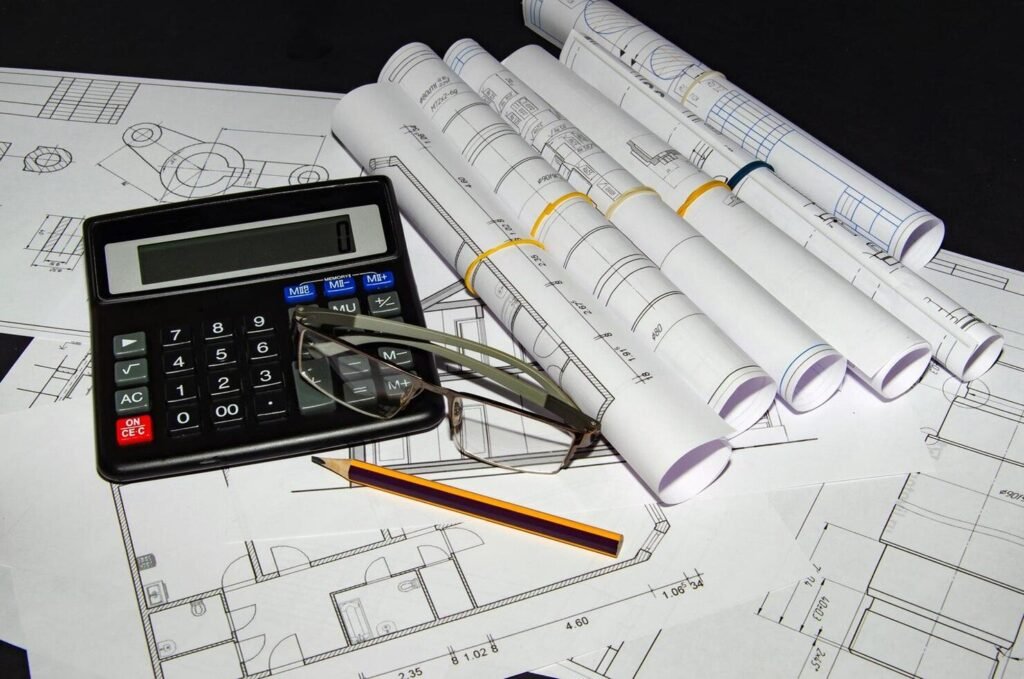
The UK construction industry in 2026 is more competitive and more digital than ever before. Material prices fluctuate. Labour shortages continue. Margins remain tight. Clients expect clear documentation and accurate cost breakdowns. In this environment, you cannot afford guesswork.
Manual takeoffs slow you down. They increase human error. They limit the number of tenders you can submit each month.
If you want to stay competitive, you need digital tools.
Construction takeoff software allows you to measure quantities directly from digital drawings. It improves speed. It increases accuracy. It reduces costly mistakes. Most importantly, it helps you submit stronger and more competitive bids.
But not all software tools are equal. Some focus on PDF takeoff. Others support full BIM integration. Some are cloud based. Others are desktop focused. Pricing also varies significantly.
In this 2026 UK guide, you will explore the 7 best construction takeoff software tools. You will learn their features, strengths, weaknesses, pricing structure, and ideal use case. By the end, you will know which tool fits your business size and project type.
Why Best Construction Takeoff Software Matters in 2026
Before comparing tools, you need to understand why software matters so much today.
First, speed determines opportunity. If you spend 20 hours measuring drawings manually, you limit how many tenders you can submit.
Second, accuracy protects profit. A small measurement error in concrete or steel can cost thousands of pounds during construction.
Third, collaboration is essential. Many UK projects involve remote teams. Architects, engineers, and contractors share digital files. You must work digitally.
Fourth, clients expect professional documentation. Structured quantity reports improve credibility.
Digital takeoff software supports all these needs. Now, let us examine the best tools available in 2026.
Bluebeam Revu
Bluebeam Revu is widely used across the UK construction and engineering industry. It is primarily a PDF markup and measurement tool, but it offers strong takeoff features.
You upload drawings in PDF format. You calibrate the scale. Then you measure areas, lengths, counts, and volumes using digital tools.
Bluebeam allows you to create custom measurement profiles. You can track quantities in real time. You can export data to Excel for further estimating.
It also offers collaboration tools. Multiple users can review drawings simultaneously.
Strengths: Bluebeam is reliable. It handles complex PDFs smoothly. It works well for contractors who already use PDF drawings. It integrates well with document management systems.
Limitations: It is desktop focused. It does not provide full BIM based 3D quantity extraction. Using advanced features requires training.
Best for: Small to mid sized contractors who mainly work with 2D PDF drawings.
Pricing: Subscription based plans. Cost depends on user level and features.
PlanSwift
PlanSwift remains popular among general contractors and subcontractors. It focuses specifically on digital takeoff.
The interface is simple. You upload plans. You drag measurement tools. You calculate quantities instantly.
You can create assemblies. For example, when you measure wall area, the software can automatically calculate related materials such as studs, insulation, and plasterboard.
PlanSwift supports exporting data into Excel or estimating software.
Strengths: User friendly interface. Fast setup. Flexible measurement options. Good for trade specific measurement.
Limitations: Windows only platform. Limited BIM model support. Primarily 2D focused.
Best for: Residential builders and subcontractors who need quick and straightforward takeoffs.
Pricing: One time license or a subscription model, depending on the version.
CostX
CostX is one of the most advanced takeoff and estimating software tools in the market. It supports both 2D and 3D BIM measurement.
You can measure quantities directly from BIM models. This improves accuracy significantly. The software automatically updates quantities when models change.
CostX also includes full estimating functionality. You can apply rates and generate cost plans inside the same system.
Strengths: Strong BIM integration. Professional reporting. High level accuracy. Suitable for large commercial projects.
Limitations: Higher price point. Requires structured training. It may be complex for small firms.
Best for: Large contractors, quantity surveyors, and firms handling complex commercial projects.
Pricing: Premium subscription pricing. Custom quotes based on features and users.
STACK
STACK is a cloud-based takeoff platform. It allows you to work from any location with internet access.
You upload drawings to the cloud. You measure quantities online. You share results with your team instantly.
STACK focuses on simplicity and collaboration. It works well for contractors who manage multiple remote projects.
Strengths: Cloud based access. Easy sharing. Fast setup. No heavy software installation.
Limitations: Requires a stable internet. Less advanced BIM integration compared to CostX or Autodesk.
Best for: Growing contractors who prefer web-based systems and flexible access.
Pricing: Monthly subscription model.
On-Screen Takeoff (OST)
On-Screen Takeoff is known for speed and precision. It allows detailed measurement directly from digital drawings.
You can create conditions, which are measurement templates for repeated elements. This saves time across similar projects.
OST integrates with estimating software systems. It works efficiently for 2D plan based projects.
Strengths: Fast measurement tools. Strong reporting. Good integration options.
Limitations: Primarily desktop based. Limited 3D BIM functionality.
Best for: Contractors who focus mainly on traditional 2D construction documentation.
Pricing: License based pricing with optional support packages.
Autodesk Takeoff
Autodesk Takeoff connects directly with Autodesk Construction Cloud. It supports both 2D and 3D quantity measurement.
If your projects use Revit or other Autodesk BIM tools, this platform integrates smoothly.
You can extract quantities from models. You can track changes automatically. You can collaborate across teams.
Strengths: Strong BIM capabilities. Cloud collaboration. Seamless integration with the Autodesk ecosystem.
Limitations: Higher subscription cost. Best suited for BIM driven projects.
Best for: Contractors already using Autodesk systems and working on model based projects.
Pricing: Subscription based annual plans.
Buildsoft Cubit
Buildsoft Cubit combines takeoff and estimating into a single platform. Quantity surveyors and commercial contractors widely use it.
You measure quantities. Then you apply cost rates inside the same system.
It supports structured Bills of Quantities. It is strong for detailed commercial reporting.
Strengths: Integrated estimating. Professional documentation. Strong reporting tools.
Limitations: Requires training. Mid to high pricing range.
Best for: Professional estimators and firms needing detailed BOQs.
Pricing: Subscription based with different tiers.
Direct Comparison: Key Differences
When comparing these tools, you should consider five main factors.
First, project type. If you handle small residential projects, advanced BIM tools may not be necessary.
Second, the budget. Premium tools such as CostX and Autodesk require a greater investment.
Third, collaboration needs. Cloud-based tools such as STACK offer flexibility.
Fourth, BIM usage. If your projects rely on Revit models, Autodesk Takeoff is a strong option.
Fifth, ease of use. PlanSwift and Bluebeam offer faster learning curves.
No single tool fits every contractor. The right software depends on your workflow.
ROI Analysis: Is Takeoff Software Worth It?
Investing in software makes financial sense.
Let us calculate.
Suppose you spend £2,000 annually on takeoff software.
If software reduces errors and prevents one major underestimation worth £8,000, you already gain a positive return.
If it saves 10 hours per tender and you submit 40 tenders annually, you save 400 hours. If your time value is £60 per hour, you save £24,000 in labour value.
Your £2,000 investment generates a strong return. Digital tools increase productivity and protect profit.
How to Choose the Right Tool for Your Business
Start by analyzing your project size and type. If you mainly handle small residential projects, you may not need advanced BIM based software. If you work on large commercial or industrial projects, choose a tool that supports complex drawings and 3D models.
Test free trials before making any decision. Most software providers offer demo versions. Use them. Check how the interface feels. Measure a real project sample. Do not commit based only on marketing claims.
Train your team properly. Even the best software fails if your team does not know how to use it. Invest time in onboarding and basic training. Short training sessions can significantly improve efficiency.
Check integration with your existing estimating process. Your takeoff tool should export data easily into Excel or your estimating software. Smooth integration saves time and reduces manual errors.
Think about long-term growth. Choose software that can scale as your business expands. A tool that works for five projects per year should also support fifty when your company grows.
Final Conclusion
Construction takeoff software in 2026 is essential for serious UK contractors.
Bluebeam and PlanSwift suit small and mid sized firms.
CostX and Autodesk Takeoff support advanced BIM projects.
STACK offers cloud flexibility. Buildsoft Cubit supports integrated estimating.
The right tool increases speed, improves accuracy, and strengthens your bids.
Choose wisely. Invest strategically. Use digital tools to grow your construction business confidently in 2026.