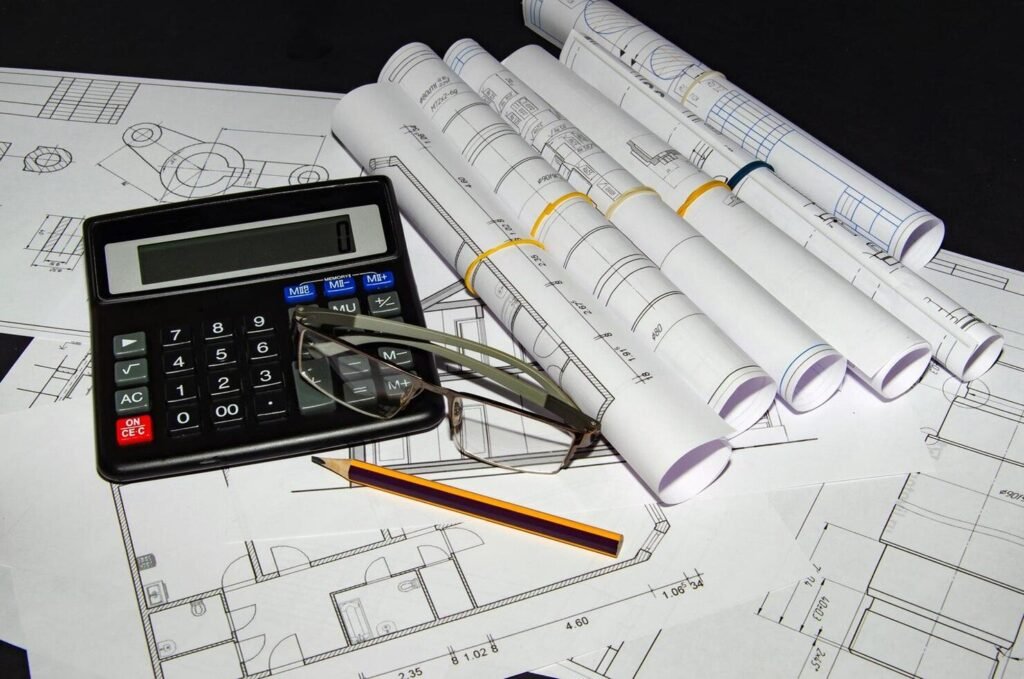
Construction projects in the UK are becoming more complex and more expensive every year. Material prices continue to rise. Labour costs are increasing. Regulations are becoming stricter. In this situation, even a small estimating mistake can reduce your profit or even turn a project into a loss.
This is where construction takeoff services play a critical role.
Construction takeoff services help you calculate the exact quantity of materials required for a project before construction begins. These services give you a clear breakdown of materials such as concrete, steel, timber, bricks, and finishing items. When you know exact quantities, you can price your projects more accurately and bid with confidence.
This guide is written for UK contractors, builders, developers, and subcontractors who want to improve their bidding accuracy and protect their profit margins. Whether you run a small building company or manage large commercial projects, understanding construction takeoff services will help you make smarter decisions.
What Are Construction Takeoff Services?
Construction takeoff services involve measuring and calculating material quantities from architectural and structural drawings. The term “takeoff” refers to the process of directly measuring from project plans to determine the amount of material required.
In simple words, takeoff means counting and measuring everything needed to build the project.
For example, if you are building a residential house, a takeoff will calculate how many cubic meters of concrete are needed for foundations, how many bricks are required for walls, how much steel reinforcement is needed, and how many square meters of plasterboard are needed for interiors.
Professionals perform these measurements using either manual methods or digital software.
In manual takeoff, estimators use printed drawings, scale rulers, and calculators. They measure dimensions by hand and record quantities in spreadsheets. This method works, but it takes time and increases the risk of human error.
In digital takeoff, estimators use specialised software. They upload drawings in PDF or CAD format and measure quantities directly on screen. The software automatically calculates areas, lengths, and volumes. This process is faster and more accurate.
The main goal remains the same in both methods: calculate precise quantities before construction starts.
Why Construction Takeoff Services Are Important for UK Contractors
If you work in the UK construction market, you already know how competitive tendering can be. Many contractors bid for the same project. The lowest accurate bid often wins.
Construction takeoff services help you prepare accurate project budgets. When your material quantities are correct, your pricing becomes realistic. You avoid guessing. You avoid surprises later.
Material wastage is another major issue. Without proper quantity estimation, you may order excess materials. This increases storage costs and ties up your cash flow. On the other hand, under ordering creates delays and additional delivery charges.
In addition, accurate quantity estimation supports compliance with UK building regulations. Many projects require detailed documentation and Bills of Quantities. Proper takeoffs ensure your project documentation is structured and complete.
Construction takeoff services help you:
- Improve bid accuracy
- Reduce financial risks
- Enhance project planning
- Save valuable time
When you outsource or use professional takeoff services, you focus more on managing the site and growing your business.
What Is Included in Construction Takeoff Services?
Construction takeoff services cover different trades and materials. The scope depends on the project type and contractor requirements.
Material Quantity Takeoff
Material quantity takeoff focuses on core construction materials. These usually include:
- Concrete quantities for foundations, slabs, columns, and beams.
- Steel reinforcement measurements.
- Structural steel components.
- Timber framing quantities.
- Brick and block counts for walls.
Estimators calculate volume, area, weight, or linear measurements depending on the material. For example, concrete is measured in cubic meters, steel in kilograms or tonnes, and plasterboard in square meters.
Accurate material takeoffs help you prepare precise purchase orders and negotiate better prices with suppliers.
Trade Specific Takeoffs
Different trades require detailed quantity breakdowns.
Electrical takeoff includes cable lengths, conduit quantities, switch counts, and lighting fixtures.
Plumbing takeoff includes pipe lengths, fittings, valves, and sanitary fixtures.
HVAC takes off measures, ductwork, insulation, vents, and equipment quantities.
Drywall and finishing takeoff calculates plasterboard sheets, joint compounds, paint quantities, and trim elements.
Trade specific takeoffs are especially important for subcontractors who need precise quantities for their specialised work.
Labour and Equipment Quantities
Some takeoff services also include labour and equipment quantities. They estimate person hours required for specific tasks and identify equipment needs, such as scaffolding or machinery.
Although pricing may not always be included, quantity data form the base for labour cost calculation.
Types of Construction Takeoffs
There are different types of takeoffs used in the UK construction industry.
Material Takeoff (MTO) focuses only on material quantities. It does not include pricing or labour.
Quantity Takeoff is broader. It includes detailed measurements of all project components required to complete the job.
Digital Takeoff uses software to measure quantities from electronic drawings. It improves speed and reduces manual errors.
On screen Takeoff is a digital takeoff method in which measurements are taken directly from digital plans using specialised tools.
3D or BIM based Takeoff uses Building Information Modelling data. Quantities are extracted directly from 3D models. This method provides high accuracy and integrates well with modern project management systems.
Each type serves a different purpose. The choice depends on project size, complexity, and available resources.
How Construction Takeoff Services Work
The process of construction takeoff follows clear steps.
First, estimators review architectural and structural drawings. They study floor plans, elevations, sections, and details carefully.
Next, they identify the scope of work. They determine what needs to be measured and which trades are involved.
After that, they measure quantities. They calculate lengths, areas, volumes, and counts. They use either manual tools or digital software.
Then, they prepare a Bill of Quantities (BOQ). The BOQ lists all materials with corresponding quantities. It provides a structured pricing format.
Finally, they deliver a detailed report to the contractor. The report includes organised quantity breakdowns that support tender submission or procurement planning.
The process may seem simple, but it requires experience and strong attention to detail.
Manual vs. Digital Takeoff: Which Is Better for UK Contractors?
Manual takeoff relies on paper drawings and physical measurement tools. It works for small projects. However, it is time consuming and carries a higher risk of calculation errors.
Digital takeoff uses specialized software. It allows rapid measurements and automatic calculations. It reduces human mistakes and improves efficiency.
For UK contractors handling multiple tenders, digital takeoff offers clear advantages. It saves time and improves accuracy. However, small contractors with limited budgets may still use manual methods for small scale projects.
In most modern UK construction environments, digital takeoff is becoming the standard.
Common Mistakes UK Contractors Make Without Professional Takeoff Services
Many contractors try to estimate quantities quickly to save time or money. This often leads to costly mistakes.
Underestimating materials is one of the most common errors. Even a small measurement mistake can cause shortages on site.
Ignoring waste factors creates problems. Every construction project generates some waste. If you do not account for it, your actual cost increases.
Missing scope items is another issue. Sometimes, small components such as fixings or connectors are overlooked. These small items add up quickly.
Incorrect unit conversions also create errors. Confusing square meters with square feet or miscalculating volumes leads to inaccurate pricing.
Pricing errors often follow quantity mistakes. When your base quantities are wrong, your entire estimate becomes unreliable.
Professional takeoff services significantly reduce these risks.
Benefits of Outsourcing Construction Takeoff Services in the UK
Many UK contractors choose to outsource takeoff services rather than hire a full time estimator.
Outsourcing is often more cost effective than maintaining an in house team. You pay per project instead of covering full time salaries.
You receive faster turnaround times. Professional takeoff companies handle multiple projects efficiently.
You gain access to experienced estimators who understand UK construction standards.
You can focus on managing sites, supervising teams, and securing new projects instead of spending hours on measurements.
Outsourcing also improves your tender win ratio. When your bids are accurate and competitive, clients trust your numbers.
Cost of Construction Takeoff Services in the UK
The cost of construction takeoff services in the UK varies.
Some providers charge per project. Others charge per trade. Some work on an hourly basis.
Pricing depends on project size, complexity, drawing quality, and turnaround time.
Small residential projects may cost a few hundred pounds. Large commercial projects may cost significantly more.
However, the cost of a professional takeoff is usually much lower than the potential loss caused by inaccurate estimation.
How to Choose the Right Construction Takeoff Service Provider
Choosing the right provider is important.
Look for experience in the UK construction market. UK regulations and measurement standards differ from those in other regions.
Check if the company uses modern software tools. Digital systems improve accuracy.
Ask about turnaround time. Fast delivery is crucial during tender deadlines.
Ensure data confidentiality. Your project drawings and pricing information must remain secure.
Also, review sample reports to evaluate clarity and organization.
A reliable takeoff partner becomes a valuable extension of your team.
Conclusion
Construction takeoff services play a vital role in modern UK construction. They provide accurate material quantities. They improve budgeting. They reduce financial risk. They strengthen your tender submissions.
In a competitive and cost sensitive market, guessing is not an option. Precision leads to profit.
If you want to win more bids, control your costs, and protect your margins, investing in professional construction takeoff services is a smart decision.
For UK contractors, builders, developers, and subcontractors, accurate quantity estimation is no longer optional. It is essential for long term success.